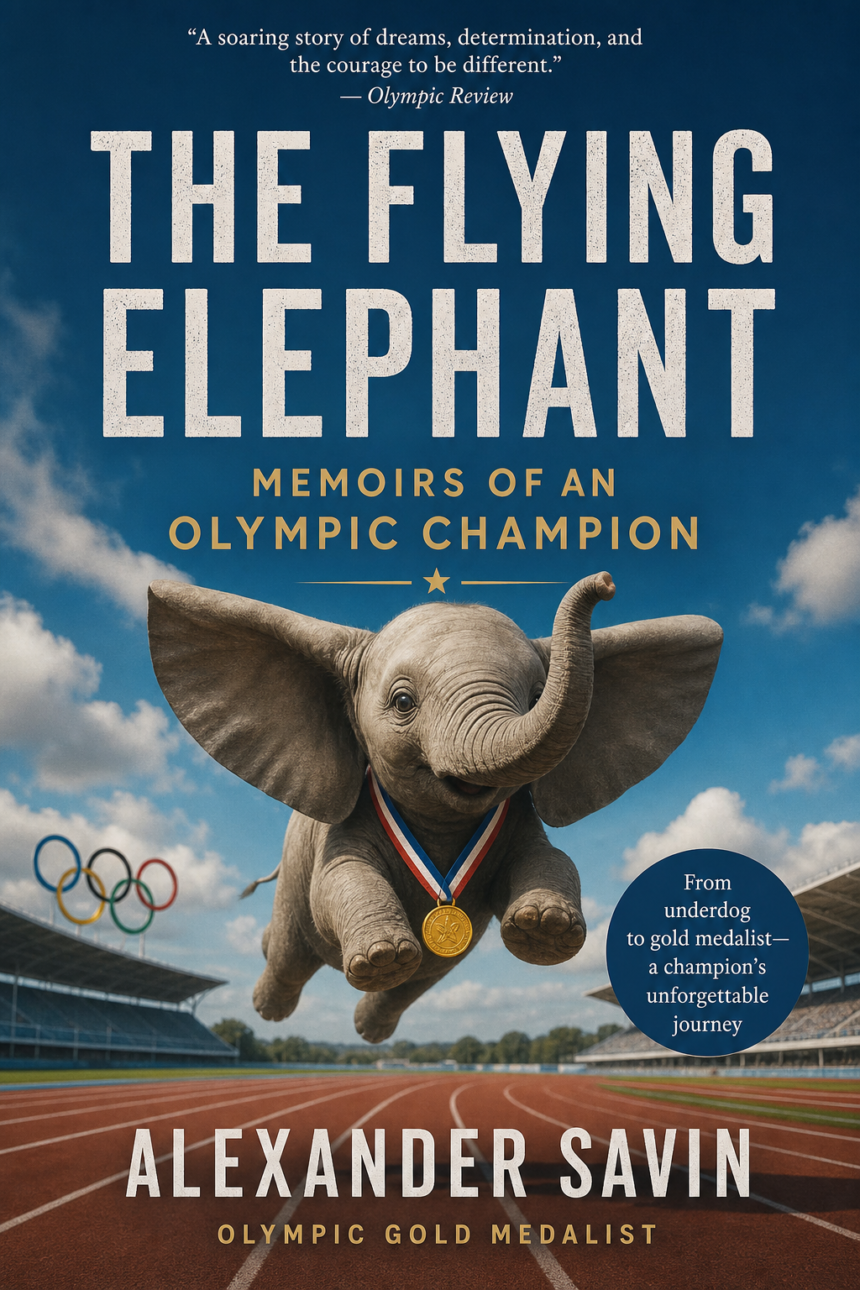
There are athletes who win medals, and then there are athletes who redefine what their sport looks like on the world stage. Alexander Savin belongs firmly in the second category. Standing at nearly 6’7″ with a wingspan that made opposing blockers look helpless, the Soviet volleyball legend earned a reputation that stretched far beyond the court. His story — captured in The Flying Elephant: Memoirs of an Olympic Champion — is one of those rare sports narratives that pulls you in even if you’ve never watched a single volleyball match.
If you’ve stumbled across the Kindle edition of this memoir and find yourself wondering whether it’s worth your time, you’re not alone. Search traffic around Savin’s book has grown steadily, driven by a renewed global interest in Cold War-era Olympic stories and the raw, unfiltered memoirs of athletes who competed under enormous political pressure. This article breaks down everything you need to know about the book, the man behind it, and why his story still resonates decades later.
Profile Summary
| Detail | Information |
|---|---|
| Full Name | Alexander Borisovich Savin |
| Date of Birth | June 23, 1957 |
| Birthplace | Moscow, USSR (now Russia) |
| Profession | Former Professional Volleyball Player, Author |
| Sport | Volleyball (Outside Hitter / Opposite) |
| Height | ~200 cm (6’7″) |
| Nationality | Russian (formerly Soviet) |
| Olympic Medals | Gold (1980 Moscow), Silver (1976 Montreal) |
| Club Career | CSKA Moscow |
| Known For | Olympic Champion, The Flying Elephant memoir |
Who Is Alexander Savin? The Man Behind the Memoir
Before we talk about the book itself, it helps to understand the person who wrote it. Alexander Savin wasn’t just another name on a roster. During the late 1970s and early 1980s, he was widely considered one of the most dominant volleyball players on the planet.
Savin grew up in Moscow during a period when Soviet athletics operated like a well-oiled machine. Young athletes with physical gifts were identified early, funneled into state-sponsored training programs, and molded into competitors who carried the weight of national pride on their shoulders. Savin’s combination of height, explosive jumping ability, and surprising agility for a man his size made him a natural fit for volleyball — a sport the USSR took extremely seriously.
He joined CSKA Moscow, the legendary army sports club that produced champions across nearly every discipline. From there, his trajectory was fast and steep. By his late teens, he was already turning heads on the international circuit.
Read More: Crew CloudySocial
The Nickname: Why “The Flying Elephant”?
Every great sports memoir needs a great title, and The Flying Elephant delivers on that front. The nickname captures a paradox that defined Savin’s playing style perfectly.
At roughly 200 centimeters tall with a powerful, broad-shouldered frame, Savin had the build of someone you’d expect to see in the front row of a rugby scrum. Yet on the volleyball court, he moved with a lightness that baffled opponents. His vertical leap was extraordinary. He could rise above the net with a hang time that seemed to defy physics, hammering spikes from angles that blockers simply couldn’t cover.
The “elephant” part acknowledged his size and raw power. The “flying” part acknowledged the grace and elevation that made him nearly unstoppable. Put them together, and you get a nickname — and a book title — that tells you everything about the contradiction at the heart of his game.
What the Memoir Covers: A Look Inside the Book
The Flying Elephant: Memoirs of an Olympic Champion walks readers through the full arc of Savin’s life and career, from his early years in Moscow to the pinnacle of Olympic glory and the complicated years that followed.
Early Life and Discovery
The opening chapters paint a vivid picture of growing up in post-war Soviet Russia. Savin describes the everyday realities of life in Moscow during the 1960s and 70s — the communal apartments, the limited luxuries, and the omnipresent influence of the state on nearly every aspect of daily life, including sports. He recounts how he was first noticed by coaches and the rapid transition from a tall, athletic kid to a serious prospect in the Soviet volleyball system.
The Rise Through Soviet Volleyball
Savin’s account of climbing through the ranks at CSKA Moscow offers a fascinating window into how elite Soviet sports actually functioned behind the scenes. The training was grueling. The expectations were relentless. And the pressure to perform wasn’t just about personal ambition — it was about representing the superiority of the Soviet system on the global stage.
He describes key mentors, brutal practice sessions, and the camaraderie (and occasional friction) among teammates who were simultaneously friends and competitors for limited roster spots.
The 1976 Montreal Olympics: Silver and Hunger
Savin’s first Olympic experience came in Montreal in 1976, where the Soviet team took home the silver medal. For many athletes, an Olympic silver would be the achievement of a lifetime. For Savin and his teammates, it was a disappointment that fueled years of obsessive preparation. The memoir captures the emotional complexity of standing on the podium with a silver medal around your neck while knowing you came so close to gold.
The 1980 Moscow Olympics: Gold on Home Soil
The centerpiece of the book is the 1980 Moscow Olympics. Competing in front of a home crowd should have been a dream scenario, but the reality was far more complicated. The Games were overshadowed by the U.S.-led boycott, which meant several top volleyball nations were absent. Savin addresses this head-on, offering a nuanced perspective on what it felt like to win gold under those circumstances — the pride, the lingering questions, and the bittersweet nature of a victory that the Western press frequently downplayed.
His descriptions of the actual matches are some of the most gripping passages in the book. Even readers with no background in volleyball will find themselves caught up in the tension of rally-by-rally accounts that read more like thriller fiction than sports recollection.
Life After the Podium
The later chapters shift to Savin’s post-competitive life, a period that many Olympic athletes struggle to navigate. The transition from being a national hero to a private citizen is rarely smooth, and Savin doesn’t shy away from discussing the challenges — identity, purpose, physical toll, and the strange quiet that follows decades of nonstop competition.
The Kindle Edition: What to Expect
For readers who prefer digital formats, the Kindle edition of The Flying Elephant offers a convenient way to access Savin’s story. The digital version preserves the full text of the memoir and is compatible with all standard Kindle devices and apps, meaning you can read it on your e-reader, tablet, phone, or desktop.
A few practical notes about the Kindle edition:
- Portability: You can carry the entire memoir alongside your other books without adding any weight to your bag — a small thing, but appreciated by frequent travelers and commuters.
- Search functionality: The Kindle format lets you search for specific names, events, or matches, which is handy if you want to quickly revisit a particular Olympic moment or teammate reference.
- Adjustable text: You can increase font size and adjust spacing, which makes the book more accessible for readers who find standard print sizes difficult.
- Bookmarks and highlights: If you’re the type of reader who likes to mark passages that resonate with you, the Kindle edition makes this effortless.
The digital edition typically mirrors the structure of the print version, including any photo inserts or supplementary material, though the display quality of images can vary depending on your device.
Why This Memoir Stands Out in the Sports Genre
The sports memoir market is crowded. Every year brings a new wave of autobiographies from athletes across every discipline, and many of them blur together after a while. So what makes Savin’s book different?
The Cold War backdrop. Savin’s career unfolded during one of the most politically charged periods in modern history. Every international tournament was a proxy battle between superpowers. His memoir provides a ground-level view of what that pressure actually felt like for the athletes caught in the middle — something you won’t get from a standard sports biography.
Honesty about the Soviet system. Rather than offering a sanitized or overly nostalgic portrait, Savin presents a balanced account. He acknowledges the genuine advantages of the Soviet sports infrastructure — the world-class coaching, the medical support, the financial security — while also being candid about its limitations and the personal costs it extracted.
Accessibility for non-volleyball fans. You don’t need to know the difference between a quick set and a back-row attack to enjoy this book. Savin writes about universal themes — ambition, sacrifice, teamwork, identity — that transcend any single sport. The volleyball details add texture, but they never become a barrier to entry.
Alexander Savin’s Career Highlights at a Glance
| Year | Event | Result |
|---|---|---|
| 1976 | Montreal Olympics | Silver Medal |
| 1977 | European Championship | Gold Medal |
| 1978 | World Championship | Gold Medal |
| 1980 | Moscow Olympics | Gold Medal |
| 1981 | European Championship | Gold Medal |
| 1982 | World Championship | Gold Medal |
This table only scratches the surface. Savin accumulated numerous medals across European Championships, World Cups, and other international competitions throughout his career, cementing his status as one of the most decorated volleyball players in Soviet history.
Who Should Read This Book?
The Flying Elephant appeals to several overlapping audiences:
- Volleyball enthusiasts who want a first-person account from one of the sport’s all-time greats.
- Olympic history buffs interested in the human stories behind the medal counts.
- Cold War readers looking for personal narratives that illuminate the era’s political tensions from an unexpected angle.
- Sports memoir fans who appreciate honest, reflective writing over self-congratulatory highlight reels.
- Russian/Soviet culture readers curious about daily life and the athletics system behind the Iron Curtain.
If you fall into any of these categories, the Kindle edition is a low-commitment way to explore the story. You can sample the opening chapters before committing to the full read, which is one of the genuine advantages of the digital format.
Frequently Asked Questions
Is Alexander Savin a real Olympic champion?
Yes. Alexander Savin won a gold medal in volleyball at the 1980 Moscow Olympics and a silver medal at the 1976 Montreal Olympics as a member of the Soviet national team. He is widely regarded as one of the greatest volleyball players of his generation.
What does “The Flying Elephant” refer to?
The title references Savin’s nickname, which captures the contrast between his large, powerful build and his remarkable jumping ability and agility on the volleyball court. He was a big man who moved like a much smaller player.
Is the Kindle edition the same as the print version?
The Kindle edition contains the full text of the memoir. Formatting, image quality, and layout may differ slightly from the physical book, but the content is complete. Features like search, adjustable font, and highlighting are exclusive to the digital version.
Do I need to know volleyball to enjoy this book?
Not at all. While the memoir includes detailed accounts of matches and training, the core of the book is about Savin’s personal journey, the political context of his career, and the universal experience of dedicating your life to a single pursuit. The sport-specific details add color but don’t require prior knowledge.
Where can I buy the Kindle edition?
The Kindle edition is available through Amazon’s Kindle Store. You can read it on any Kindle device or through the free Kindle app on iOS, Android, PC, and Mac.
Is the memoir available in English?
Availability in English may vary depending on the edition and publisher. Some versions of the memoir have been translated, while others may only be available in Russian. Check the product listing on Amazon for language details before purchasing.
Final Thoughts on Savin’s Story and Its Lasting Appeal
Sports memoirs work best when they give you something beyond the box scores. The Flying Elephant: Memoirs of an Olympic Champion succeeds because Alexander Savin writes about his life with the same intensity and precision he brought to the volleyball court. The Kindle edition makes his story more accessible than ever, putting a remarkable life narrative right at your fingertips.
Whether you’re drawn to the Olympic drama, the Cold War context, or simply the portrait of an extraordinary athlete navigating an extraordinary era, Savin’s memoir delivers a reading experience that lingers well after you’ve turned the final page. It’s a reminder that behind every medal is a human being with a complicated, fascinating story — and few stories are as compelling as the man they called the Flying Elephant.